Do you wake up with a tight, sore jaw? Has your partner told you that you grind your teeth at night? Or have you noticed your teeth looking flatter or more chipped than they used to?
Grinding and clenching (the dental term is bruxism) is very common, and most people who do it at night have no idea. The good news is that it’s easy to check for, and a custom night guard is a simple way to protect your teeth while you sleep.
The Bottom Line
- Grinding and clenching often happen during sleep, so many people don’t know they do it.
- Common signs: a sore jaw or headache in the morning, worn or chipped teeth, sensitive teeth, and a partner hearing grinding.
- Stress, sleep problems, caffeine, alcohol and some medicines can all play a role.
- A custom night guard cushions your teeth and takes pressure off your jaw while you sleep.
- Your dentist can spot the wear, check your jaw, and fit a guard made for your bite.
What Are Teeth Grinding and Clenching?
Grinding is when your upper and lower teeth slide back and forth against each other with pressure. Clenching is when you bite down hard and hold it. Some people do both. It can happen during the day, often when you’re concentrating or stressed, but nighttime grinding is the kind that tends to do the most damage, because you can’t feel yourself doing it.
Signs You Might Be Grinding Your Teeth
- A sore or tired jaw when you wake up, or a jaw that clicks or pops
- Morning headaches, often around the temples
- Teeth that look flat, worn, chipped or shorter than before
- Sensitive teeth, especially to cold, from worn enamel
- Cracked fillings or crowns that keep needing repair
- Tooth marks or a scalloped edge along the sides of your tongue
- A partner who hears grinding sounds at night
If several of these sound familiar, it’s worth bringing up at your next visit.
What Causes It?
There usually isn’t one single cause. Common contributors include:
- Stress and anxiety. This is one of the most common triggers.
- Sleep problems. Grinding sometimes shows up alongside snoring or sleep apnea. If you snore loudly or wake up tired, tell your dentist.
- Caffeine, alcohol and tobacco, especially later in the day.
- Some medicines, including certain antidepressants.
- A bite that’s off, such as a filling or crown that sits a little high.
Why It Matters
Your teeth are built for chewing, not for hours of heavy pressure every night. Over time, grinding and clenching can wear down enamel, chip or crack teeth, break fillings and crowns, make teeth sensitive, and leave your jaw muscles sore. In some people it can also loosen teeth or add to jaw joint (TMJ) discomfort. Catching it early can save you from bigger repairs later.
How a Custom Night Guard Helps
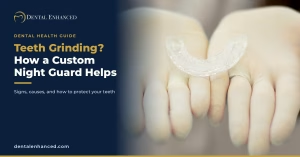
A night guard is a thin, comfortable appliance you wear over your teeth while you sleep. It doesn’t stop the urge to clench, but it puts a smooth, protective layer between your upper and lower teeth so they take the force instead of your enamel.
Custom vs. store-bought
You can buy a boil-and-bite guard at the drugstore, and some people use one for a while. A custom night guard is made from impressions or a scan of your teeth, so it:
- Fits your bite exactly and stays in place
- Is thinner and more comfortable, so you’re more likely to keep wearing it
- Is made from durable material that holds up to nightly grinding
- Is checked and adjusted by your dentist so it doesn’t throw off your bite
A night guard is different from a sports mouthguard. If you’re looking for protection for contact sports, see our page on athletic mouthguards.
What to Expect at Your Visit
At Dental Enhanced, your exam includes a look at the wear on your teeth, your gums, your bite and your jaw muscles. If grinding looks likely, we’ll talk through what we see, answer your questions, and take impressions or a scan for your guard. When it’s ready, we check the fit and make any small adjustments so it feels right.
If worn or chipped teeth need repair, we’ll explain your options, such as cosmetic bonding or crowns, and why protecting them with a guard first matters.
Tips That Can Help Along With a Guard
- Wind down before bed: a short walk, stretching, or a few minutes of slow breathing
- Cut back on caffeine and alcohol in the evening
- Notice daytime clenching. Lips together, teeth apart is the relaxed resting position.
- Put a warm compress on sore jaw muscles
- Mention snoring or daytime tiredness to your dentist or doctor
Frequently Asked Questions
Will a night guard stop me from grinding?
It usually doesn’t stop the habit itself, but it protects your teeth and can ease jaw soreness by cushioning the pressure.
Is a night guard uncomfortable to sleep in?
Most people get used to it within a few nights. A custom guard is thinner and fits more snugly than a store-bought one, which helps.
How do I clean my night guard?
Rinse it each morning, brush it gently with a soft toothbrush and cool water, let it dry, and keep it in its case. Bring it to your checkups so we can look it over.
Can grinding damage dental work?
Yes. Grinding can chip or crack fillings, crowns, veneers and bonding. A guard helps protect that work.
No dental insurance?
Our Dental Discount Plan includes exams, X-rays and cleanings, plus 30% off other treatment. We also offer payment plans.
References
Think You Might Be Grinding?
If you’re waking up with a sore jaw or noticing worn teeth, we can check for grinding and talk about whether a custom night guard is right for you.
Request an appointment online or call Dental Enhanced at (725) 765-9500.
340 E Warm Springs Rd STE 100, Las Vegas, NV · Monday to Friday, 9:00 AM to 5:00 PM · dentalenhanced.com
This article is for general information and isn’t a substitute for professional dental advice.