Full mouth reconstruction combines restorative and cosmetic dental treatments to rebuild damaged, missing, or worn teeth, correcting bite function, jaw alignment, and oral health problems while also improving appearance. It typically involves multiple procedures completed over several months, addressing issues that a single treatment like a crown or filling cannot fix alone.
Most people picture veneers or teeth whitening when they hear “smile makeover.” Full mouth reconstruction is different. It’s for people dealing with years of broken teeth, chronic jaw pain, or bite problems that have gotten worse over time, not just people who want whiter teeth for photos.
The Bottom Line
- Full mouth reconstruction can involve a mix of dental implants, crowns, bridges, and bite correction, often planned across several appointments over 3–12 months
- It’s typically recommended when three or more teeth need structural work, not just one or two
- Unlike a cosmetic-only makeover, it addresses function first—chewing, speech, and jaw alignment—then appearance
- Patients with worn-down teeth from grinding (bruxism) are common candidates, since enamel loss affects the whole bite pattern
- Treatment plans are staged, meaning restorative work (like a root canal or extraction) often comes before cosmetic finishing
1. It Fixes Chewing Problems That Have Been Ignored for Years
People adapt. If a molar cracks, they start chewing on the other side. Do that for five years and the jaw joint starts compensating too, which can lead to soreness or clicking when opening the mouth. Full mouth reconstruction rebuilds the missing or damaged teeth so both sides of the mouth actually work again. In practice, what we see most often is patients who didn’t realize how much they’d been avoiding certain foods until months after treatment, when eating an apple or steak stops being a calculated decision.
2. It Addresses the Root Cause of Jaw Pain, Not Just the Symptom
Chronic jaw pain, headaches near the temples, or a bite that feels “off” often trace back to misaligned teeth or an uneven bite plane. Painkillers or a night guard alone don’t fix a structural problem—they just manage it. A reconstruction plan looks at how the upper and lower teeth meet across the entire arch, not tooth by tooth. When crowns, bridges, or implants are placed at the correct height and angle, the bite force distributes evenly again, which is often what actually reduces the jaw strain.
3. It Can Stop Long-Term Bone Loss in the Jaw
When a tooth is missing for an extended period, the jawbone underneath it starts to shrink. This is a well-documented process explained by the alveolar bone structure, which relies on the pressure from tooth roots to stay dense. Dental implants placed as part of a reconstruction plan act like an artificial root, giving the bone something to hold onto. This matters more the longer a gap has been left untreated—waiting five or ten years usually means more bone grafting is needed before an implant can even go in.
4. It Improves Speech Clarity for Patients With Multiple Missing Teeth
Front teeth and the roof of the mouth shape certain sounds, especially consonants like “s,” “f,” and “th.” Patients missing several teeth—especially anterior ones—often develop a whistle or slur they’ve stopped noticing themselves. Rebuilding the arch with dental bridges or implant-supported restorations gives the tongue and lips the right surfaces to work against again. It’s one of the more overlooked improvements—patients rarely list it as a reason for treatment, but many mention it afterward.
5. It Reduces the Risk of Further Tooth Loss
One damaged tooth changes the way force travels across the whole mouth. Neighboring teeth pick up extra load, wear down faster, or shift position. Left alone, one problem tooth can turn into three or four over a few years. Reconstruction interrupts that pattern early. Crowns and inlays and onlays reinforce compromised teeth before they crack further, and replacing missing teeth stops the drifting that leads to bite collapse.
6. It Can Correct Years of Teeth Grinding Damage
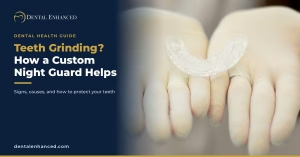
Bruxism flattens and shortens teeth over time, sometimes so gradually that patients don’t notice until a dentist points out how much enamel is gone. This shortens the face’s vertical height slightly, which can make jaw muscles work harder just to chew normally. A reconstruction plan can restore that lost height using crowns or onlays sized to the original bite, and a night guard is usually part of the aftercare to prevent the new work from wearing down the same way.
7. It Gives a More Predictable Long-Term Result Than Piecemeal Fixes
Fixing one tooth at a time, as problems come up, tends to create a mouth full of restorations that don’t quite match in height, shade, or function. Each one was planned in isolation. A full reconstruction is mapped out with the entire bite in mind from the start—often using models or digital scans to plan the sequence before any drilling happens. That coordinated approach is why the results tend to hold up better over 10 to 15 years compared to a series of unrelated repairs.
8. It Can Include Cosmetic Improvements Without Extra Procedures
Because crowns, bridges, and implants are already being placed, shade and shape can be adjusted at the same time. This is different from adding a separate smile makeover after the fact. For patients who also want straighter-looking teeth without months of orthodontic wear, some reconstruction plans incorporate ClearCorrect clear aligners beforehand to align the bite, or porcelain veneers on teeth that don’t need structural work but sit within the same smile line.
9. It Reduces the Chance of Needing Repeat Treatment on the Same Teeth
Restorations placed without addressing an underlying bite problem often fail early—a crown might crack within two or three years if the bite forces on it were never corrected. That’s a common reason patients end up back in the chair sooner than expected. Because full mouth reconstruction treats the cause, not just the individual tooth, the restorations placed tend to last closer to their expected lifespan, which for a well-placed crown is often 10 to 15 years according to guidance from the American Dental Association.
10. It Can Improve Confidence Without That Being the Primary Goal
Confidence usually comes up as a side effect, not the starting point. Patients who avoided smiling because of broken or missing teeth often relax that habit once the function issue is solved and the appearance improves along with it. That’s a meaningfully different motivation than cosmetic dentistry done purely for aesthetics. The confidence gain here tends to be more durable, because it’s tied to a mouth that actually works properly, not just one that looks different in photos.
References
- American Dental Association. Crowns and Bridges: Clinical Guidance. ADA.org. 2025.
- National Institute of Dental and Craniofacial Research. Dental Implants Information. National Institutes of Health. 2024.
- American College of Prosthodontists. Full Mouth Rehabilitation Guidelines. ACP. 2025.
- Mayo Clinic. Bruxism (Teeth Grinding): Symptoms and Causes. MayoClinic.org. 2024.
- Academy of General Dentistry. Bone Loss and Tooth Replacement Timing. AGD Impact Journal. 2023.
This article is for informational purposes only and does not constitute professional advice. Please consult a qualified dentist for personalised guidance.
Wondering If This Applies to You?
If chronic bite pain, multiple damaged teeth, or years of piecemeal dental work sound familiar, it may be worth having a dentist evaluate the whole picture rather than one tooth at a time. A conversation with a dental professional can clarify whether a staged reconstruction plan makes sense for your situation.